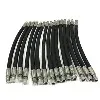
Fluorine-coated hoses are widely used for their high chemical resistance and durability in a range of industries, including chemical, pharmaceutical, and food processing. A new fluorine-coated hose, known as the Teflon hose, has emerged as a reliable and cost-effective solution for challenging applications.
Teflon hoses are made from a special type of polymer called polytetrafluoroethylene (PTFE), which has a unique combination of properties that make it ideal for use in chemical and high-temperature environments. The Teflon hose is coated with a thin, non-stick fluoropolymer coating that provides excellent chemical resistance and durability.
The Teflon hose is easy to clean and maintain, making it an ideal choice for applications where cleanliness is essential. The non-stick surface of the hose makes it resistant to adhesion and contamination, which is important when transferring high-purity liquids, such as in the pharmaceutical and food industries.
The Teflon hose is also highly flexible and can be customized to fit a wide range of applications. It is available in a variety of sizes, lengths, and fittings to meet specific requirements. The hose can be used for a range of applications, including chemical transfer, steam transfer, and high-temperature fluid transfer.
One of the key benefits of the Teflon hose is its high resistance to corrosion and chemical attack. The fluorine coating provides an additional layer of protection, allowing the hose to withstand aggressive chemicals and acids without deteriorating.
Another advantage of the Teflon hose is its ability to handle high-pressure applications. The hose is designed to withstand extreme temperatures and pressures, making it suitable for use in harsh environments.
Overall, the Teflon hose is an innovative and practical solution for challenging applications in a variety of industries. Its unique combination of properties makes it a reliable and cost-effective alternative to traditional hoses, providing superior chemical resistance, durability, and flexibility.